 (01)
(01)
(01)
Hymn
The recorded history of Poland begins in the 10 th century. In the year 965, a tribal leader of Polanians known as Prince Mieszko I married a Bohemian princess Dobrawa. He subsequently converted to Christianity and was baptized in 966. The conversion raised the status of the country as well as his own standing. Poland joined the world of civilized kingdoms. Mieszko established the Piast dynasty. Poland became an independent, centralized, Christian state. The new country took on a role, which it would hold for centuries, to serve as a buffer zone between the West and the East.
)
Mieszko I – the first Prince of Poland (02)
The reigns of Mieszko I and his son Boleslaw Chrobry mark the period when the Polish tribes were brought together into a united kingdom, a new national entity which made active contributions to European politics. The war campaigns skillfully conducted by Mieszko and his son earned Poland not only new territories, but also a reputation of the new power to be reckoned with, even by the Holy Roman Emperor. The major success of the early Piastian foreign policy era was the Congress of Gniezno held in 1000, during which the Emperor Otto III recognized Boleslaw as the principal ally in his plans to unite Europe under the imperial rule, and approved the creation of an independent Polish metropolitan see in Gniezno where the subsequent coronation of Boleslaw as the king of Poland was to take place. Towards the end of Boleslaw’s reign Poland was already a strong country, with an efficient administrative system and a developed Church structure built around the metropolitan see in Gniezno, and adjacent dioceses in Cracow, Poznan, Wroclaw, and Kolobrzeg.
)
Poland of the11 th century (03)
Source: http://digilander.libero.it/kbogucki
Unfortunately, the civil wars, which ravaged the country in the following century, severely undermined Poland’s position. Neighbouring states also joined in the conflict. Mieszko II lost the crown and a part of the state domains. His son Kazimierz reunited the country administratively. Boleslaw II continued Kazimierz’s policy. Thanks to his military talents and the support he offered to the Pope during the investiture conflict with the Emperor, he managed to regain the crown. He exerted influence over the installation of princes in Ruthenia and Hungary, and halted the eastward drive of the Holy Roman Empire. However, in 1079, he forfeited the throne as a result of a rebellion supported by the Empire and Bohemia. Another contributing factor was the conflict between the king and Stanislaw, Bishop of Cracow, which culminated in the withdrawal of the Church’s support for Boleslaw.
)
Wawel Hill – the Royal Castle (04)
In the 12 th century, Boleslaw III could not prevent the decline of the kingdom. In 1138, Poland was parceled out among several Piast sons, fragmenting it geographically and politically. The period of feudal dismemberment lasted for over a century and a half. During that time the status of Poland diminished and would not be regained until the mid-14 th century. However, this was also a period of social stability and rapid advancement. Thousands of new villages and many towns were founded. Numerous settlers arrived from Germany. In the13 th century one of the Polish princes extended an invitation to the Teutonic Knights with a view to protect the eastern and northern flanks of his state. However, eighty years later, instead of protecting its border, the Knights attacked Poland.
)
The Teutonic Castle of Malbork (05)
During the reign of the last Piastian kings of the 14 th century, Wladyslaw Lokietek and Kazimierz III the Great, most of the Polish lands were reunited. Poland became a strong, well-managed kingdom, actively participating in the political, economic and cultural life of Europe. In 1364 a university was founded in Cracow, the second university established in Central Europe after Prague.
)
Jagiellonian University of Krakow (06)
Kazimierz III welcomed the pogrom-plagued Jews from the west. The king produced no heir of the male line, which spelled the end of the Piast dynasty. In 1370 the Polish throne passed to allied relatives of the Piasts – the Hungarian branch of the House of Anjou, king Louis the Hungarian and his daughter Jadwiga (Hedwig).
)
Jadwiga – the Queen of Poland (1384-1399) (07)
The threat from the Teutonic Order compelled Poland to enter into a treaty with Lithuania. Jadwiga was wedded to the Grand Duke of Lithuania, Wladyslaw Jagiello. The Polish– Lithuanian alliance of 1386 created a multinational state. For the next two hundred years the Jagiellonian dynasty ruled over the joint state, one of the vastest dominions in Europe. In the 15 th century Bohemia and Hungary had also a Jagiellonian monarch. Under this dynasty Poland progressed militarily, culturally, and politically. One of the highlights of Wladyslaw Jagiello’s reign was the victory over the Teutonic Order at the Battle of Grunwald in 1410. Several decades later another war broke out. Poland regained the part of Pomerania region near Gdansk and put a stop to the threat presented by the Order. In the 1525 the monastic principality was secularized and became a fiefdom to the king of Poland. However, the Jagiellons were unable to save Hungary, which fell to the Turks and for 200 years remained under the Ottoman rule.
)
Victory over the Teutonic Order at the Battle of Grunwald in 1410 (08)
Politically, Poland also marched ahead. In 1493 the Polish Parliament, a first representative body in Europe, was established. The national assembly emerged and consisted of King, Senate and Seym, the lower House of Parliament. Kings of Poland solicited the support of the politically and economically ascendant nobility by granting privileges. These privileges gradually curtailed the monarch’s prerogatives.
The Jagiellonian period witnessed tremendous cultural advancement. Poland became one of the centers of Renaissance. Copernicus’ De Revolutionibus Orbium Coelestium was a spectacular achievement in science. These were also the times witnessing the creation of the works by a sculptor Veit Stoss and the times of the Italian humanist writer known as “Callimachus” living in Poland, and the writings of native-born literati such as Mikolaj Rej and Jan Kochanowski.
During the 15 th and 16 th centuries, Poland was a country open to new religious trends. Unlike other European countries, Poland did not experience religious wars during that time. Not only could heterodox religionists find sanctuary here, they were also protected by the kings and lords of Poland. As a result, the Polish culture and scholarship experienced an unprecedented influx of new ideas and literary works, building up an image of Poland as a country of religious tolerance. This was particularly true in the light of the Warsaw Edict, ratified in 1573, which gave Protestants equal rights with Catholics. The Jagiellonian era, especially the 16 th century, is known in Poland as the Golden Age.
)
Nicolaus Copernicus (09)
In 1569 King Zygmunt August brought into effect a statutory union of Poland and Lithuania, up till then joined only by a personal union. Henceforth the Kingdom of Poland and Grand Duchy of Lithuania would be an elective monarchy, with the entire estate of nobility enjoying the right to elect their king.
The first royal election was held in the spring of 1573. The contenders to the throne of Poland included Ivan IV the Terrible, the Tsar of Moscow, Archduke Ernest Habsburg, and Henri de Valois, brother of Charles IX of France. Henri won the election, but he turned out to be a bad choice. He did not understand the customs of the country he was expected to rule and as soon as he learnt of his brother’s death, he fled from Poland after only four months of rule, to assume the throne of France as Henri III. After the new interregnum lasting for a year, the nobility elected Anna, sister of Zygmunt August, to be a monarch under the stipulation that required her to marry the next successful candidate in the royal election. The nobility elected Stefan Batory of Transylvania. After a swift military campaign, Stefan Batory successfully concluded a conflict with Russia for the contested territory of Livonia. The election after Batory’s death determined the grandson of Zygmunt I, Zygmunt Vasa of Sweden, as the first king of the Vasa dynasty to assume the throne of Poland. The Vasas ruled until 1668 and although they maintained Poland’s status as an esteemed European power, they also entangled the kingdom in a series of wars, failed to prevent a civil war in Ukraine and tolerated the growth of power of Polish magnates.
)
The Kingdom of Poland and Lithuania of the 17 th century (10)
From the early 17 th century Poland was in a constant state of war with one or other of its neighbours. Wars devastated the country. The treasury emptied. As of 1652, several seyms were halted by obstructions. The chain of disasters culminated in the Swedish Deluge (1655-1660), when the country had to face a simultaneous invasion by the Swedish, Russian, Cossack, Prussian and Transylvanian armies. Albeit the war ended in Polish victory, the country emerged from it devastated and weakened internally. In 1665 a civil war broke out, resulting in the abdication of Jan Kazimierz.
In 1674 the throne of Poland passed to Lord Hetman Jan Sobieski, hero of the Turkish wars. He had to preside over a country weakened by rival factions of magnates and territorially diminished by a temporary Turkish occupation of Podolia. Even though from the military standpoint he became the glorious victor at the relief of Vienna, 1683, he could not meet the challenges of putting the affairs of the state in order. He was not successful on the diplomatic front, either.
)
Jan III Sobieski at the Battle of Vienna (11)
The reigns of the kings of a German dynasty August II and August III (1697-1763), Electors of Saxony, brought a political decline. Poland took part in the Northern War between Russia and Sweden. The Swedish king Charles XII invaded Poland in 1702 and removed August II from the Polish throne. In 1709, the Russians defeated the Swedes at Poltava and August II returned. After the war, the country began to be dependent on its neighbours. The feuding factions of the great lords looked to foreign powers for support. Although Poland was politically week, it remained a dynamically developing European state.
In 1764 Polish lords elected the next king of Poland, Stanislaw Poniatowski. He was supported by the Russian tsar Catherine II. Poniatowski was to become the last king of Poland. On ascending to the throne he tried to carry out financial and educational reforms. He also established a military school. During his reign Poland flourish culturally. Unfortunately, the reforms found strong resistance from the Poland's neighbours, Prussia, Austria and Russia. Democratic Poland couldn’t stand alone against such absolute powers. In 1772 Russia reached an agreement with Prussia and Austria whereby they accomplished the first partition of Poland. The state lost one third of its territory. The deep shock of these events had some positive effect on the state of affairs in Poland. In the 1790s radical domestic reforms were undertaken. In May 1791 the “Great Seym” established a new Constitution, which was a first such document in Europe, and second in the world. Alarmed by the prospect of a strong Polish state, Russia decided to intervene. The war resulted in the second partition of 1793. The final blow to the Polish independence was dealt after the failure of an anti-Russian upraising of 1794. After several successes, the brave national leader Tadeusz Kosciuszko lost the decisive battle and was taken prisoner by the Russians. During subsequent years Kosciuszko fought for American independence. In 1795 Stanislaw August was forced to abdicate. Russia, Prussia and Austria divided the remaining parts of Poland. The state disappeared from the maps of Europe for 123 years, but Poles never ceased their efforts to regain their independence.
)
The allegory of the partitions of Poland (12)
The beginning of the 19 th century brought hopes for the restoration of independence. The Polish Legions formed in Italy to fight alongside the Napoleon’s army. After defeating Austria and Prussia, Napoleon created the Duchy of Warsaw, and helped the Poles to institute their own army. This army fought in all the main Napoleon's military campaigns. The hopes of Poland's independence ended with the disastrous invasion of Russia and Napoleon’s downfall. The Duchy of Warsaw was replaced by the Kingdom of Poland, attached to Russia by personal union.
Despite another setback, Poles did not abandon the hope of independence. They revolted against foreign dominance throughout the 19 th century. As early as 1830, an armed insurrection broke out in the Russian Partition. The National Government was created and the Tsar was dethroned. Despite initial success, the uprising ended in failure. The Kingdom was dismantled and put directly under the Russian control. Subsequent uprisings brought more disasters. All insurrections, that took place in the years 1846, 1848 and 1863 respectively, were brutally crushed as well.
)
The national uprising in 1863 (13)
After each uprising a wave of political exiles left the Polish territories. Some of emigrants became known worldwide, e.g. Fryderyk Chopin, Ignacy Paderewski and Maria Sklodowska-Curie. After each uprisings Poles were repressed. The Polish language was banned in schools and institutions. Brutal methods were used to oppress the Catholic Church in Poland. However, despite a hard struggle to maintain the national identity, the national spirit managed to survive. Only the Austrian zone of partition enjoyed a certain measure of autonomy during the second part of the 19 th century. In spite of continuous waves of repression, the Polish culture, literature, painting and music flourished as never before. Maria Sklodowska, a Polish scientist who with her husband Pierre Curie discovered radioactivity of the first radioactive isotopes, was awarded two Nobel Prizes (1903 and 1911). Polish historical writer Henryk Sienkiewicz received the Nobel prize in literature. In 1853 Ignacy Lukasiewicz invented the world’s first paraffin lamp. Music of Fryderyk Chopin entered into a canon of piano music.
The dream of independence was revived during the First World War, which broke out between the partitioning powers. After the Bolshevik revolution of 1917, Russia withdrew from the war effort. Germany and Austria-Hungary capitulated in 1918. The Polish leader Jozef Pilsudski, commander of the Polish Legions, was appointed as the National Commander. Poland was formally reconstituted in November 1918. The Treaty of Versailles sanctioned Poland’s independence. During the war and at the conference, the cause of Poland's independence was strongly supported by the United States of America. It introduced the tradition of a close cordial relationship between the two countries, a trend that lasts up to date, but is difficult to understand by some modern European countries. In 1919, Ignacy Paderewski, the famous pianist and patriot, became the prime minister and the Legislative Seym opened its session.
)
Jozef Pilsudski, a Polish national hero (14)
The year of 1919 witnessed a war erupt between Poland and the Bolshevik Russia. The newly reconstituted state of Poland won the decisive battle of Warsaw in 1920. The victory halted the Bolshevik plans for a revolutionary march across Europe. Lord D’Abernon, a British diplomat, named this battle the eighteenth most decisive battle of the world.
During the first years of independence, the domestic situation remained uneasy. After numerous political conflicts, Jozef Pilsudski, who had exited the Polish political scene in the year 1922, returned onto the political stage in 1926 and forced the Cabinet of Prime Minister Witos to resign, seizing absolute power in a coup d’état and ruling until his death in 1935. The period leading up to the Second World War brought economic stability and cultural development back to Poland. In 1924 another Polish writer received the Nobel Prize for Literature.
The existence of Poland as an independent country was interrupted by the outbreak of the Second World War. Despite the signed non-aggression pacts, on the first day of September 1939 Germany invaded Poland. Seventeen days later the Soviet Russia commenced an offensive against Poland attacking from the East. A German-Soviet agreement divided the Polish territories between the two occupying countries. Wladyslaw Raczkiewicz formed in France a Polish government-in-exile, which after the defeat of France in 1940 was moved to London. In the meantime, both occupying powers applied a policy of extermination directed against the Polish population. It was carried out on all annexed territories, in concentration camps by Germans, in labour camps by Russians. Twenty one thousand of Polish officers and intellectuals, who became prisoners-of-war, were executed on Stalin’s order. The Nazis murdered over 2 million Poles, and 3 million Poles of Jewish origin. Additional hundreds of thousands perished in the Soviet occupational zone.
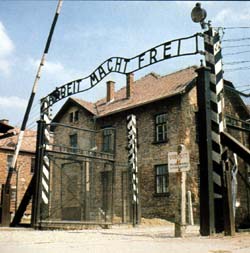
The concentration camp in Auschwitz ( Oswiecim) (15)
The Polish nation and its government-in-exile did not surrender. President Raczkiewicz and Prime Minister Wladyslaw Sikorski organized a new Polish army in the West. It was to become the fourth largest military force to combat the Nazis. Poles fought in Norway, France and Britain in 1940. During the next years they participated in battles on the fronts in Africa, Italy and Russia. They also battled alongside the American, Canadian and British soldiers in the liberation campaign of Holland. The armed resistance movement in Poland reached a membership of about half million of underground soldiers. The largest battle fought by the Polish underground resistance army was the Warsaw Uprising of 1944. The insurgents, left to fight without any outside help, were forced to capitulate after 63 days of struggle. After the downfall of the uprising the capital city of Poland was completely destroyed by Germans.
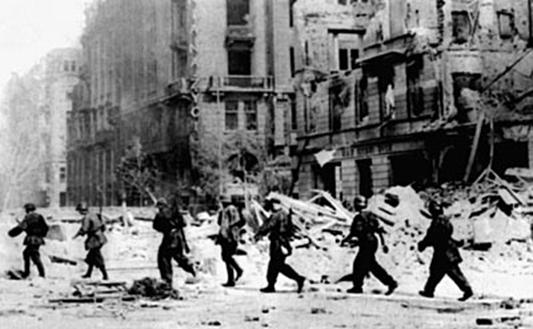
Warsaw Uprising (16)
Albeit the decisions concerning the future of liberated Poland did not depend on the participation of Polish citizens in the war efforts, but on agreements reached by the victorious superpowers. The Polish territory remained occupied by the Russian troops over 1944 and 1945. A series of Allied conferences taking place respectively in Teheran, Yalta and Potsdam sealed the fate of Poland. The state lost approximately half of its pre-war territory in the East, as it was ceded to the USSR, while some new territories were added in the West. Germany accepted the new borders in a non-aggression pact signed with Poland in 1970. In the end, Poland lost one fifth of its pre-war territory, its population diminished by a third and the national economy was completely devastated.
)
(17)
Instead of joining in the joys of liberation, the nations of Eastern Europe had to endure again the presence of foreign troops on their territories. This particular part of Europe found itself in the Soviet sphere of influence. As a result, the economical development of the countries in question suffered for the next 45 years. Poland was governed by a communist party, which reported directly to the authority of the Soviet government. In 1955 Poland became a member of the Warsaw Pact. The Polish nation did not reconcile itself with the Soviet domination and the alien economic, cultural and anti-religious system imposed on the Polish population in the process. The communist government applied measures of suppression directed against the anticommunist opposition as well as against the Roman Catholic Church. As a result, many former “Underground Army” soldiers and Catholic priests filled the prisons. Even cardinal Wyszynski, Primate of Poland, suffered imprisonment as well.
A wave of first political changes swept over Poland in 1956, after the death of Stalin and the protests of workers in Poznan. The leaders of the ruling Communist Party were dismissed and their replacements formed the new government. Initially even the level of dependence on the USSR was reduced, however, only a few months after the course of liberalization policies was launched, the adopted positive changes were abruptly halted. The Communist Party held on to its absolute power. The conflicts between the communists and the rest of the Polish society persisted. The fight for freedom was supported by the Church institutions. In 1968 violent demonstrations of students erupted throughout Poland, and in 1970 workers in Gdansk and other coastal cities protested. The police and army deployed in the pacification of these protests were responsible for deaths of a lot of people.
As a result of the protests, the government leaders were removed and a new First Secretary of the Communist Party was appointed. The next political and economical crisis manifested itself in 1976 as the economy based on communist rules turned out to be highly inefficient. Despite the repression, the workers protested again and new illegal opposition groups began to form and emerge. The Church played a significant role in the defense of human rights. In 1978, Cardinal Karol Wojtyla, the Archbishop of Cracow, was elected Pope and assumed the name John Paul II. The following year he visited his homeland for the first time, instilling hope for changes. The visit infused Poles with strength to carry on the fight for their rights and liberty.
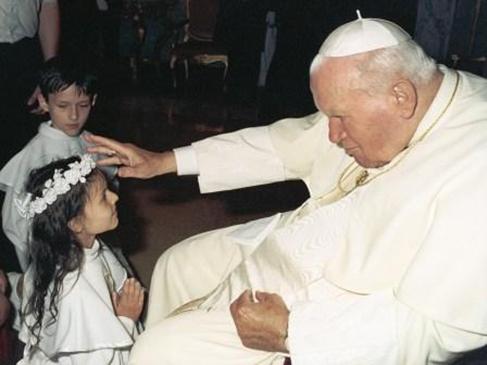
Pope John Paul II (18)
In 1980 workers in the shipyards in Gdansk began a strike. The labour unrest quickly spilled into other industries and soon encompassed the whole of Poland. Consequently, the first independent trade union ever to be established in the Eastern Europe was founded and named Solidarity. Lech Walesa became its first leader, and later received the Nobel Prize for Peace as a reflection of his prominent role in this liberating movement. The regime supported by the Soviet Union attempted to arrest the democratic changes. In December of 1981 the martial law was declared throughout Poland. The majority of Solidarity leaders were arrested, but the Polish population did not surrender. The resistance bounced back in a new wave of strikes launched in 1988 culminating in the talks of the “round table” which followed in 1989. As a result, the first installation of a non-communist government to take place in Central Europe after the Second World War became a reality. Soon other countries of the region followed the example of Poland. The fall of the Wall in Berlin signified to the world the beginning of collapse of the Soviet system.
The logo of Solidarity movement (19)
At present, Poland is a member of the European Union and NATO. The country is free, independent and tries to make up quickly for the lost time. However, at the same time, as it is the case in other East European countries, Poland continues to experience the painful results of fifty years of dependence on a foreign totalitarian system, alien to Polish traditions and imposed against the will of the Polish nation.
Polish literature is closely associated with the history and culture of Europe and the role of Poland within it. The first literary texts created in the Polish language date back to the 13 th century.
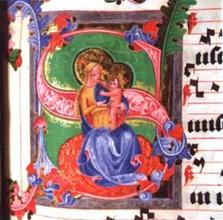
A manuscript of the 14th century (20)
Since then and throughout until the end of the 18 th century, Polish literature experienced all the adventures and revolutions of European literature. In the process, it gave birth to the world-class poets such as Jan Kochanowski, Mikolaj Sep Sarzynski or Ignacy Krasicki, who counted among Europe’s greatest poets of the periods of Renaissance, Baroque and Enlightenment respectively.
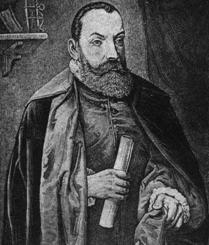
Jan Kochanowski, the father of Polish literature (21)
The close of 18 th century, when Poland lost its independence for over 120 years, witnessed the creation of an extraordinary current of literary influences. For a nation deprived of its statehood and all its accompanying institutions, the writer became a spiritual and political leader, moral authority, lawmaker, and guide. Literature was transformed into the keeper of national cultural identity. Language was the only motherland left. By extension, the words of poets, so prominent in the Polish literature of the 19 th century, were elevated to the status of the highest value, national law and absolute truth. They were regarded and revered by Poles almost as an epiphany. The poet became the national bard and prophet. The creative process became synonym with a patriotic duty. The writer's calling evolved into a mission to free his countrymen. Such an enormous challenge could only be met by the greatest Polish poets of the 19 th century: Adam Mickiewicz, Juliusz Slowacki, Zygmunt Krasinski and Kamil Norwid.
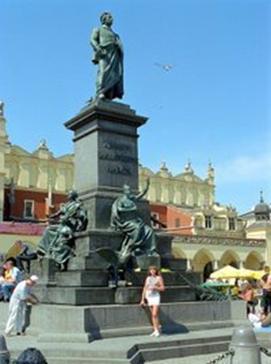
The monument of Adam Mickiewicz in Krakow (22)
Compelled by this omnipresent notion of the patriotic responsibility, Polish literature would at several moments throughout the history of Poland either surrender to the pressure of representing national interests of an enslaved nation, or assume a role of the rebel rising against this very idea. Between the ideologies of national duty, on the one hand, and rebellion, on the other, there expands a literary realm unusually rich and fertile both in ideas and aesthetics. It is there that the preponderance of Polish poetry, prose and drama can be found functioning and fulfilling its destiny to this very day.
The perennial tragedy and dilemma of Polish literature could be expressed aptly by a dichotomy of universality and hermetism – and it is best illustrated through the prism of the European significance of the first Polish laureates to be awarded the Nobel Prize in Literature. Henryk Sienkiewicz, the author of the extremely popular historical novels spanning various periods of Polish history, gained the worldwide recognition and the Nobel Prize (1905) for "Quo Vadis", a novel depicting the birth of Christianity, and filmed many times since. Wladyslaw Reymont was honoured for "The Peasants" in 1924.
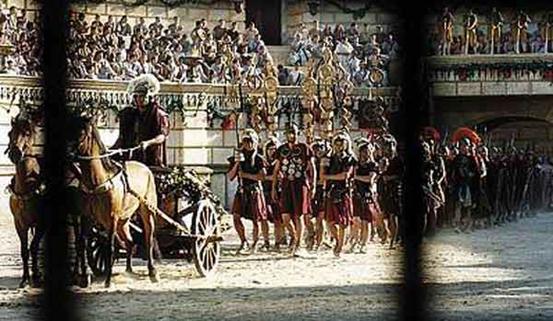
The scene from the film Quo Vadis (23)
The Polish literature of the 20 th century, particularly since the time Poland regained its independence after the First World War, could be characterized by a revolt against the idea of “a duty to the nation”. Witold Gombrowicz, certainly the most admired contemporary Polish writer worldwide, selected such “Freedom from Polishness” as the main theme of his innovative works.
Hitherto unknown qualities such as the ambiguous grotesque and philosophical catastrophism appear in the writings of Bruno Schulz and Stanislaw Witkiewicz, whose dramatic oeuvre preceded the rise of “the theatre of absurd”.
Polish literature during the Communist era developed in two separate tiers. On the one hand, the emigrant literature of Milosz, Herling-Grudzinski and Kolakowski enjoyed the freedom away from the limitations of censorship and all kinds of ideological servitude. On the other hand, the literature created within the country had to find a way to exist under oppression and invent a language which would allow it to speak in a more or less normal voice in spite of the restrictions. The 1976 birth of the literary “second circulation”, illegal underground network of writers and publishers, saved the fate of Polish literature in some sense and aided in bringing about of the historical changes which culminated in the overthrowing of the Communist regime in the year 1989.
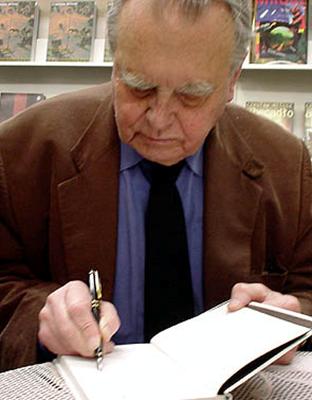
Czeslaw Milosz – the Nobel Prize laureate (24)
Paradoxically, the political conditions that severely curtailed the freedom of speech, as well as the historical realities of the communist-ruled Poland, assisted in the formation of the Polish School of Poetry. Its most characteristic feature manifested itself in the ability to speak of the fate of the individual caught up in the cruel mechanisms of history, to link the existential and metaphysical with the historical.
From a completely different prospective – and in a different language – such a destiny was captured and described in the works of the grotesque dramaturgy of Slawomir Mrozek. Similarly, the writings of Stanislaw Lem, an author active in the field of philosophical “science-fiction”, made him one of the most important writers of this genre today. The modern Polish literary panorama would not be complete without the mention of the prose of Jerzy Andrzejewski, Jaroslaw Iwaszkiewicz, Tadeusz Konwicki, Andrzej Szczypiorski and Marek Hlasko, whose writings have been translated into many languages.
After the fall of Communism in 1989, new tendencies in Polish literature began to emerge and gain in strength. The most important and interesting ones among them attempt to find spiritual roots or regional identity within recent history, as well as introduce the language of mass media and the symbols and heroes of mass culture into literature.
Defined and delineated by the notions of tradition and contemporaneity, duty and rebellion, metaphysics and history, the present-day Polish literature remains searching for new ways to articulate these ideas. Among the writers whose works are most frequently translated and published outside of the Polish borders are: Stanislaw Lem, Jerzy Andrzejewski, Wieslawa Szymborska, Marek Hlasko, Czeslaw Milosz, Slawomir Mrozek and Karol Wojtyla – Pope John Paul II.
)
The Nobel Prize of Wislawa Szymborska (25)
Source: http://www.nobelprize.org
Polish authors have received the Nobel Prize for Literature four times: Henryk Sienkiewicz (1905) for his extraordinary achievements in the field of epic prose, Wladyslaw Reymont (1924) for his astonishing national epic, the novel titled "The Peasants", Czeslaw Milosz (1980) for the entirety of his writings and finally Wislawa Szymborska for her poetry (1996).
Apart from literature, other popular forms of art include painting, music and cinematography. Polish painting possesses a very distinct national character, what accounts for the fact that despite its obvious beauty, it is not well known in the world. Jan Matejko is considered to be the most popular Polish painter. He was active during the nineteenth century, at the period of time when the Poles did not have their own state. The themes expressed in his works include monumental scenes derived from the national history of Poland. A hall in Pinakoteka, one of the largest museums of the world, is adorned with a Matejko painting of impressive size, depicting the victory of the Polish King Jan Sobieski, which he achieved over Turks at the siege of Vienna in the year 1783.
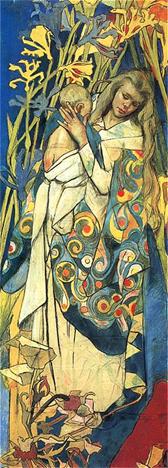
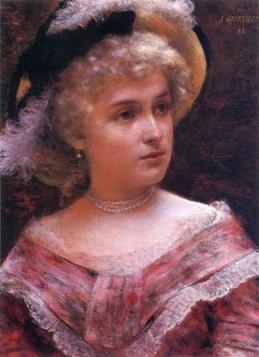
Other notable Polish painters include Jerzy Kossak, Stanislaw Wyspianski (a Renaissance type of artist, skilled in many disciplines of art) and Aleksander Gierymski. Many influential Polish magnates employed throughout centuries countless painters, sculptors and architects hailing from Italy, Germany or Netherlands, among them Veit Stoss, Marcelo Bacciarelli and Canaletto.
)
Jerzy Kossak, Hunting with a falcon (26)
)
(27)
Stanislaw Wyspianski, Planty, the Green Area around the Old City of Krakow at the dawn
(28)
Stanislaw Wyspianski, a stained glass
(29)
Aleksander Gierymski, Rococo Lady
)
(30)
Veit Stoss Altar, St. Mary’s Church, Krakow
)
(31)
Jan Matejko, the 3 rd May Constitutionof 1791
Wawel Castle and the Royal Cathedral located in Krakow are the largest Polish art museums, assembling a collection of works by the greatest artists from Poland and Europe. The largest world collection of Dutch tapestries can also be admired there. In the collections of Krakow museums one can find paintings by such masters as Leonardo da Vinci.
)
(32)
Wawel Cathedral – the Royal Church and the national necropolis
)
(33)
Tapestries of the mid-17 th century made in Brussels
Source: http://www. arrasy.krakow.pl
Fryderic Chopin is considered to be the most prominent Polish composer and pianist of all times. He was born in Zelazowa Wola, near Warsaw, and spent most of his life travelling throughout Europe. Chopin included numerous elements of the Polish musical tradition into his compositions. His works have for ever entered the canon of world music. The world famous international musical competition dedicated to the music of Chopin takes place in Warsaw every five years. The best young pianists from around the world participate in it. A win guarantees international fame and acclaim.
)
(34)
Frederic Chopin
Classical music plays an important role in the Polish educational system. An interconnected network of schools in existence educates many young Polish musicians, from kindergarten to the University level. As a result, a Pole won the Warsaw Chopin competition held in the year 2005.
Frederic Chopin – Polonez As-dur op. 53 nr 6
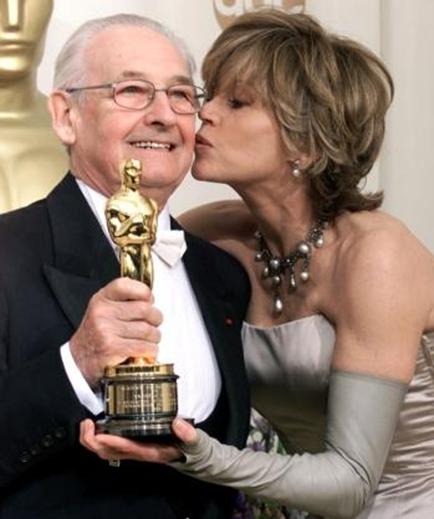
The most commonly known art form of present day appears to be cinematography. Many Polish film directors achieved international fame, among them Andrzej Wajda, Krzysztof Zanussi, Agnieszka Holland (Europa, Europa, The Secret Garden) and Roman Polański. Andrzej Wajda is the recipient of many international awards, among them "The Golden Palm" at the Cannes International Film Festival awarded for a film depicting the origins of the Polish social movement "Solidarity", as well as a Hollywood Academy Award, the Oscar for the entirety of his work.
(35)
The Oscar goes to…Andrzej Wajda
Source: http://www.cracowonline.com
(36)
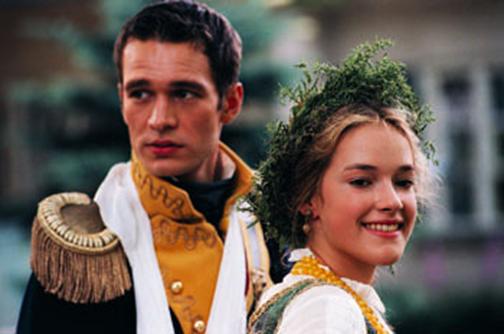
A scene from the film Pan Tadeusz based on the national poem written by Adam Mickiewicz
Source: http://www.polskaszkola.wsurreyca
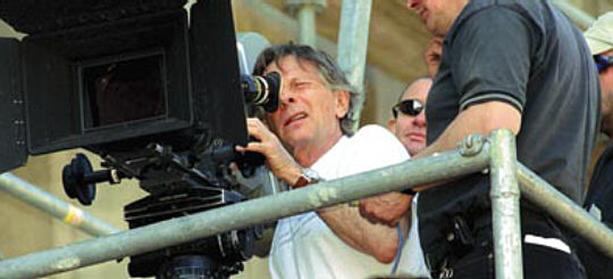
First films of director Roman Polanski were shot in Poland, and at present he has returned to work in his homeland again, however, the majority of his movies such as Rosemary's Child, Chinatown, The Pirates, Frantic, Bitter Moon originated in Hollywood.
(37)
Roman Polanski, the Polish director
Source: http://www.1lo.pl
www.poland-embassy.si/eng/poland/history